Maria Korneeva/Getty Images |
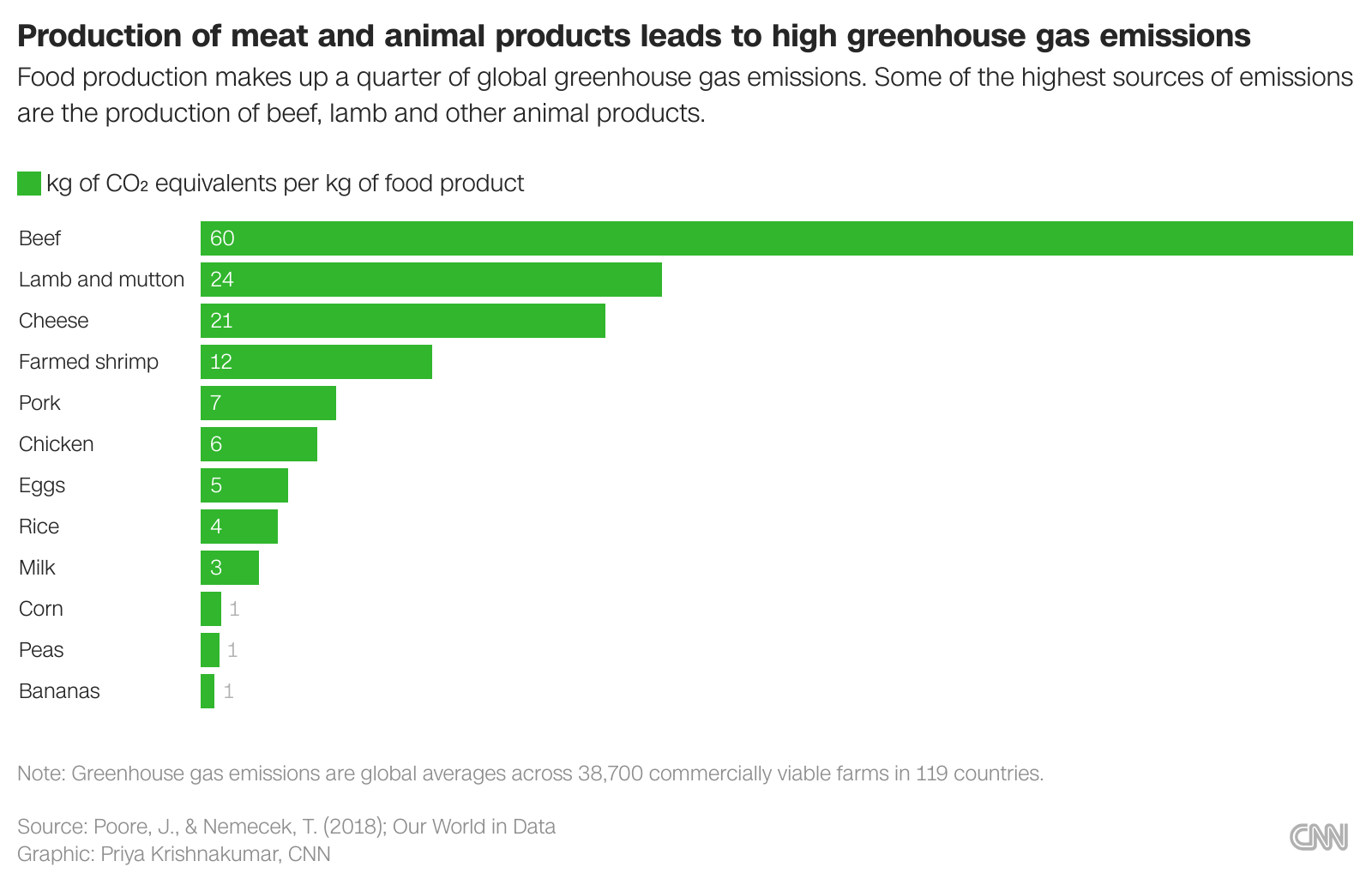
There is meaningful change to be made on behalf of the climate as soon as your next meal. Studies have shown that the food system (growing plants, harvesting them, raising animals, transporting it to consumers, and so on) accounts for around a third of the world's greenhouse gas emissions. That's a lot of impact, but it's also something we have a lot of control over. The next thing to know is that all foods are not created equal. While some have a perfectly reasonable climate footprint, others have a massive one. |
|
|
Those delicious rib-eye steaks and juicy cheeseburgers are a big contributor to the climate crisis. |
|
|
Did that make you hungry for some red meat? Sorry, that was not the intention. Because raising animals for meat is, in general, worse for the climate crisis than growing vegetables. Beef stands out for these reasons: - Methane (aka cow flatulence): Cows have specialized bacteria in their stomachs to help with digestion, which in turn create methane -- an incredibly potent planet-warming gas.
- Growing food to feed food: Producing food crops takes fertilizer and energy that emit planet-warming gases -- and then we use a lot of those crops to feed the animals that we later eat.
- Cutting down the Amazon: Where do we get the land to raise cattle? A lot of it comes from clear-cutting centuries-old forests that were really good at absorbing carbon dioxide from the atmosphere. And in one huge example, most of the Amazon's deforestation is driven by cattle ranching.
To be fair to beef, chicken isn't winning any environmental awards, either. Or cheese, for that matter. |
|
|
Eating a plant-heavy diet is one of the best things you can do to minimize your climate impact. | Most food production does some harm to the climate and environment. But knowing how our foods rank can empower us to make the most informed choices at the market. Ready to make a change? Let's start with something relatively easy. |
Reduce your beef consumption, starting with one day a week. |
|
|
If you've already given up beef, try going fully meatless one day a week. If, or when, that turns out to be easy, increase the number of days. There's a word for when you increase the number of days to all of them: vegetarian. Another easy and significant way to reduce your food impact is to reduce food waste. US farmers, for example, have to grow so much more food than we actually need, because up to 40% of what they produce gets thrown out, according to the United Natural Resources Defense Council. Then all the energy it took to grow that food is wasted, too. Here's one last suggestion that is fairly simple: Buy local. But for the biggest impact, focus on buying less of the foods that are most likely to travel by plane to get to the grocery: fragile fruits and veggies such as green beans, asparagus, blueberries and raspberries. | |
|
Home composting has its benefits, but it's not a big win for the climate. | | | Composting does prevent food scraps from ending up in the landfill, where they can produce planet-warming gas. But you could end up with the same problem in your own compost pile if you're not doing it right. The more impactful change would be to prevent food from being wasted in the first place. If you've already reduced your beef consumption and you've reduced your food waste to a minimum, you might consider making a bigger change. |
|
|
Marco Springmann is a scientist who grew up in Germany -- a country known for its sausage. But it wasn't until he began studying the impact of food on the climate crisis that he carefully examined his own lifestyle. And he ended up making dramatic changes for the sake of the planet. How about you? Inspired to make a change? Between now and the next edition of this limited newsletter series, we'd like to really work on it. |
|
|
Of these ideas -- eating less meat or dairy, reducing food waste, eating more locally -- pick one to give yourself as a challenge for the next week. Email us at lifebutgreener@cnn.com and let us know how it goes. And tell someone else what you're doing because that creates accountability and may inspire them, too. |
|
|
| ® © 2024 Cable News Network. A Warner Bros. Discovery Company. All Rights Reserved.
1050 Techwood Drive NW, Atlanta, GA 30318 |
|
|
|
|
|
|
|